ServicesStorm Damage Repair
Storm Damage Repair in Green Cove Springs
After high wind or a tropical storm, we walk your roof and find what actually moved, tore or let water in. We photograph it before anyone talks about fixes. You get a clear written scope and repairs made to the cause, not just the stain.
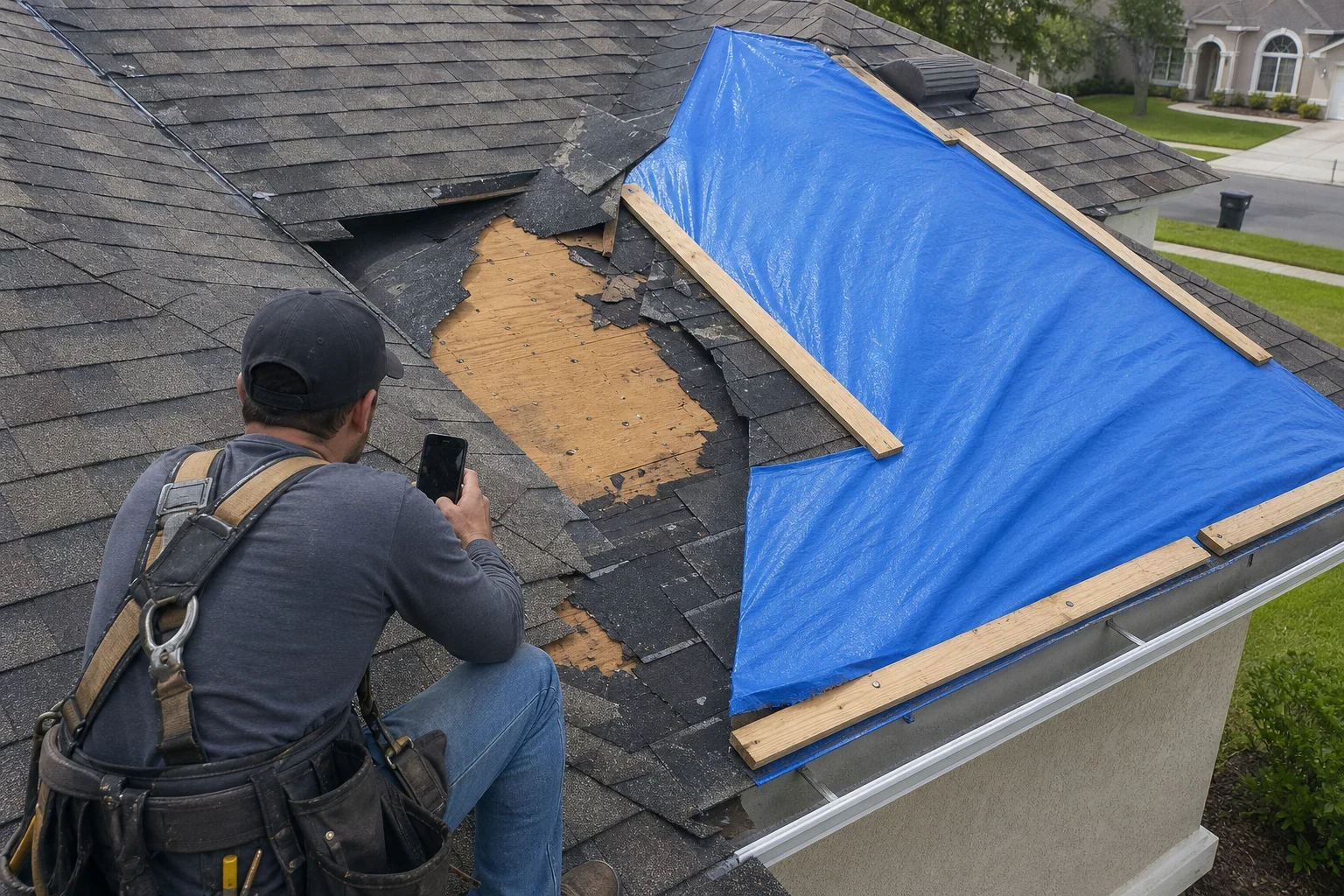
Storm damage is rarely where the stain shows
Wind does its work at the edges. It lifts shingle tabs along the rakes and ridge, breaks the sealant strip that holds them flat, and drives rain sideways under flashing that was fine on a calm day. A ceiling stain after a storm often sits several feet from the opening, because water runs along decking and rafters before it drips.
So our storm damage repair starts with tracing. We look at the roof surface, the flashing and every penetration, the decking from the attic where we can reach it, and the gutters that may have pulled loose. Then we sort the findings for you: fresh damage from this storm on one side, older wear a claim would not cover on the other, each with its own photo.
Most roofs that come through a Florida storm season need a repair, not a new roof. When the damage is wide enough that patching would leave a mismatched, weakened surface, we say so plainly and walk you through roof replacement instead.
What our storm repair work covers
Lifted and creased shingles
We replace torn or missing shingles and hand-seal neighbors whose adhesive strip let go. Creased shingles are replaced too. A crease means the mat has broken, and that tab will lift again in the next blow.
Flashing and roof penetrations
Step flashing, wall and chimney flashing, pipe boots and vent caps are checked and reset or replaced. These are the places wind-driven rain finds first.
Decking and underlayment
Where water has reached the wood, we open the area, replace soft or delaminated decking, and lay fresh underlayment before the surface goes back on.
Metal panels and fasteners
On metal roofs we look for bent panels, backed-out screws, worn washers and loose trim at the eaves and ridge. Our metal roofing page explains that system in more depth.
Gutters pulled loose
Gutters that tore away or filled with granules and debris are rehung or replaced so water leaves the roof edge cleanly.
A photo record for your claim
Every finding is photographed with its location on the roof noted. Those pictures go to your adjuster if you file, and if you decide not to, they stay with you as a record of the roof's condition.
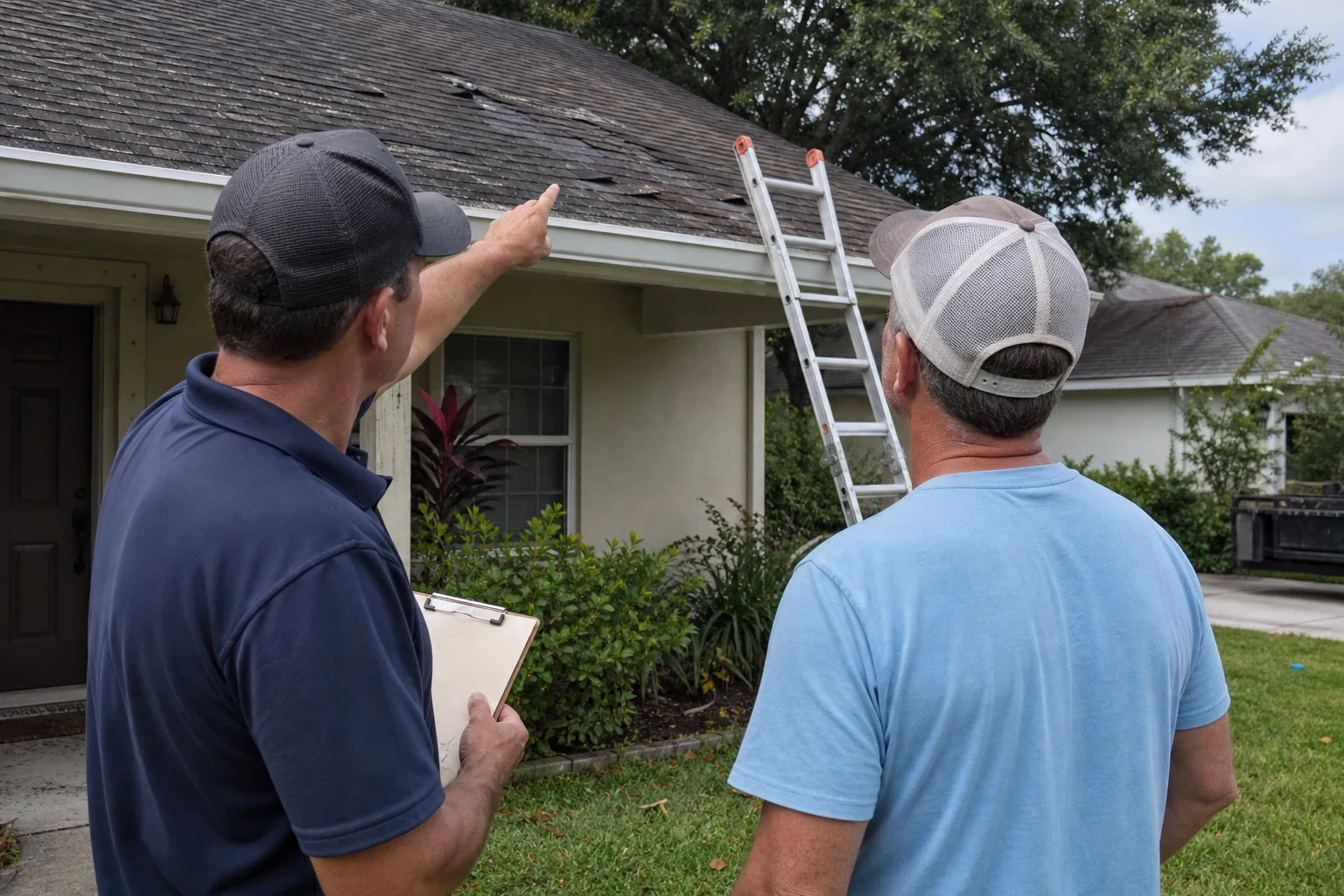
When to have your roof checked after a storm
- Shingle scraps on the lawn
- A handful of torn pieces is enough to mean an opening somewhere up top, with a loosened row likely sitting next to it.
- A new stain or a damp attic
- A stain that shows up after wind and heavy rain usually means water got past the underlayment. The source may be well uphill from the spot you see.
- Granules piled at the downspouts
- A sudden heap of gritty granules after a storm points to shingles scoured by wind or flying debris.
- Tabs that flap or show a line
- From the ground, watch for tabs that lift in a breeze or carry a straight horizontal crease. Both mean the seal has broken.
- Bent gutters or loose drip edge
- Metal pulled away at the roof edge lets wind get under the first course of shingles next time.
How a storm repair visit runs
- 1
Free post-storm inspection
We come out at a scheduled time, walk the roof when it is safe to, and check the attic. You see the photos before we leave.
- 2
Cause and scope in writing
You get a written estimate that names each problem, where it sits and what fixes it, kept separate from wear that predates the storm.
- 3
Your adjuster, if you file
When you open a claim, we deal with the adjuster ourselves rather than leaving you in the middle. We meet on your property and review the photos side by side. The final decision on the claim stays with the adjuster.
- 4
The work itself
Tarps go over shrubs and flower beds and boards over the drive before anything comes off the roof. We strip back to solid wood, then rebuild with fastening that meets Florida wind requirements. As a licensed general contractor, we handle the permit whenever the job needs one.
- 5
Cleanup and a final look
Nails are magnet-swept from the yard and drive, debris is hauled away, and we photograph the finished work for your records.
What decides the price of a storm repair
Wind hits every roof differently, so storm repairs never price alike. We build the number from what the inspection turns up, one item per line, so the estimate fits the job. When a claim is approved, we lay the insurer's scope next to ours in the open, with you included. Any share you cover yourself can be financed.
- How far the damage spreads
- Twelve shingles on a single slope is a modest job. When damage reaches several slopes, replacing part of the roof can be the better choice.
- What sits beneath the shingles
- Soaked or soft decking means more labor and material. There is no way to know until the spot is opened, so we photograph what we find and explain it before we replace anything.
- Matching what is already there
- Many older shingle lines are no longer made. Finding a near match, or choosing to redo a whole slope so it looks even, changes both the price and the finished look.
- How difficult the roof is to reach
- Steep pitches and second-story edges call for harness lines and roof jacks, and a cramped lot slows getting material up and debris down. The estimate shows that setup time.
- Whether a permit is needed
- Bigger repairs can call for a permit and an inspection, which bring fees and add a bit of time to the schedule.
Questions about storm repairs
- Who do I call first, my insurer or a roofer?
- Having the roof checked before you contact your insurer shows whether there is genuine storm damage worth reporting. Our post-storm inspection is free, with no obligation. If the damage is small or below your deductible, you might decide not to file.
- Do you deal with insurance adjusters?
- We do. We meet the adjuster at the house, hand over our photos and measurements, and walk through every item we noted. We are not your adjuster and we do not read your policy for you, but we make sure nothing on the roof is missed.
- How do you separate storm damage from age?
- Storm damage looks a certain way: new tears, creases lined up with a single wind direction and bare mat that is still bright. Age shows up evenly, as brittle edges and lost granules over the whole roof. Our photos point out which is which, since an honest split matters to any claim.
- Can my roof be covered until the repair happens?
- When the inspection turns up an opening, we discuss short-term protection, like a fastened tarp, while the repair gets scheduled. We attach it so the surrounding shingles are not harmed and take it off once the permanent repair is done.
- Will hurricane season leave me needing a new roof?
- In most cases, no. Storm damage tends to gather at edges, ridges and flashing, and a careful repair puts the roof back in good shape. Replacement is the better call when torn or loose shingles appear on most slopes, or when the shingles were already brittle and near the end before the storm. Then we show you both options and the long-run cost of each.
Have the storm's work looked at properly
Tell us what you noticed once the weather passed. We will set a time for a free post-storm inspection in Green Cove Springs, Fleming Island, Orange Park or nearby, and show you exactly what we find.