ServicesRoof Inspections
Roof Inspections in Green Cove Springs, Read From Cause to Fix
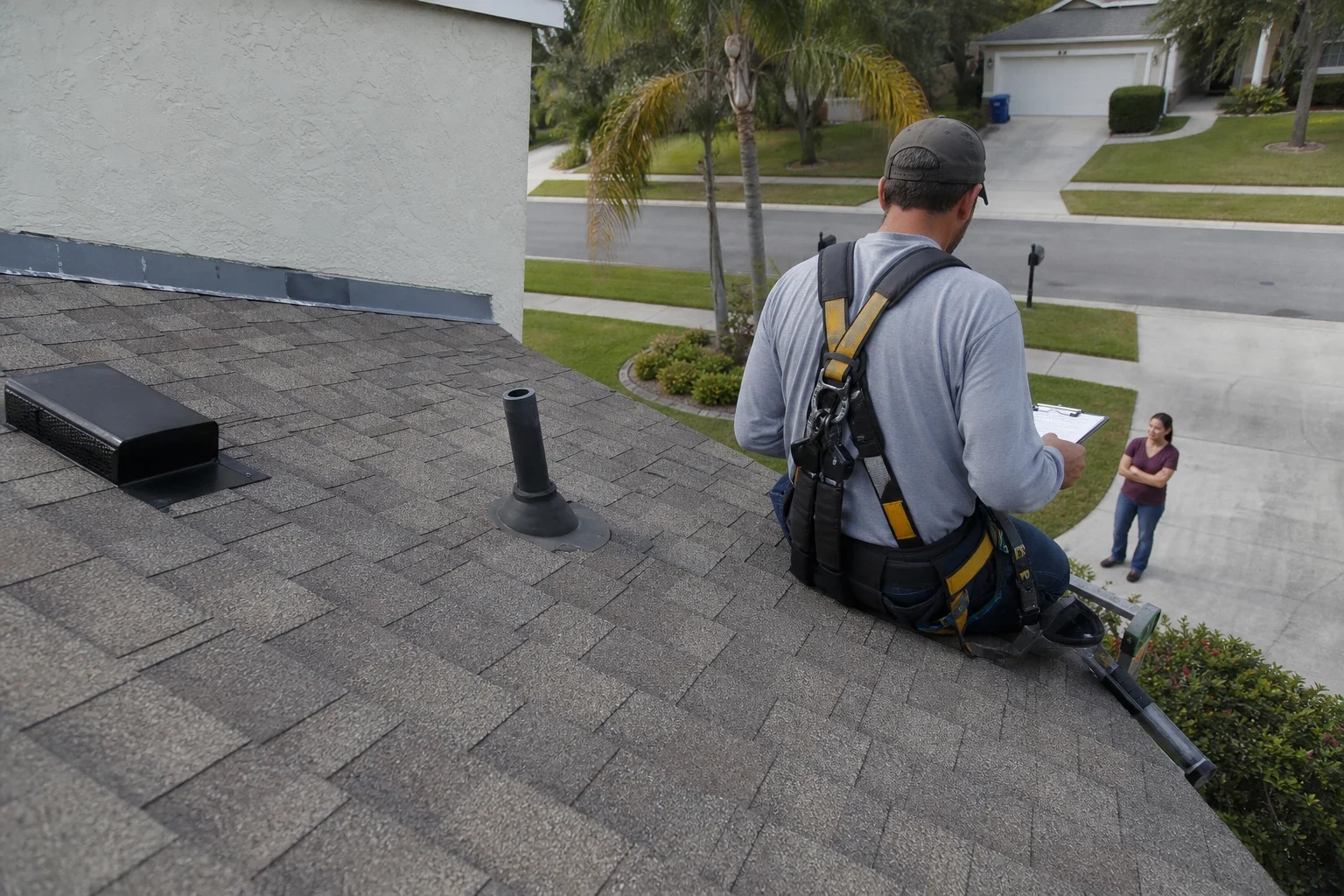
We inspect your roof the way a careful repair should begin: on the surface, at every flashing and vent, and from the attic below. You get photos, a plain account of what is wearing and why, and a free estimate for anything that needs work.
What a proper inspection tells you
A roof rarely fails all at once. Water finds one lifted shingle tab, one cracked pipe boot or one rusted nail, then runs along the decking before it shows up as a ceiling stain several feet away. An inspection is how you find that starting point while the fix is still small.
It is the right call before you buy or sell, when your insurer asks about the roof's age and condition, or simply when no one has looked up there in a few years. If the roof is sound, we tell you so and leave it alone.
We are a licensed general contractor, so the people who inspect your roof can also handle the roof repair or roof replacement if it comes to that. Whether it does is your decision.
What we check on every inspection
- The roof surface
- We look over every slope for granule loss, cracked or curling shingles, lifted tabs and exposed nail heads. On metal roofs we check seams, fasteners and their rubber washers, which dry out under strong sun long before the panels do.
- Flashing and penetrations
- Chimneys, skylights, wall-to-roof joints, plumbing vents and exhaust caps are where most leaks begin. We check sealant, step flashing and pipe boots one by one.
- Valley, ridge cap and drip edge
- A valley channels runoff from two slopes at once, so worn or shifted material there matters more than almost anywhere else. We also check the ridge caps and drip edge for anything working loose in the wind.
- Attic and decking
- From inside, we look for daylight, water staining, damp insulation, darkened or soft decking and signs of poor ventilation. The attic often shows a leak's real path better than the roof surface does.
- Gutters and drainage
- Clogged or sagging gutters can back water up under the roof edge and look like a roof leak. We note what we see so the fix goes where the problem actually is.
- Photos and a plain summary
- You get pictures of each finding with a short explanation, sorted into what needs attention now, what to keep an eye on and what is fine.
Signs it is time for an inspection
A stain you cannot place
A brown ring on the ceiling or a damp patch near a wall means water is getting in somewhere. The source is often not directly above it.
Grit in the gutters
New shingles shed a few granules. A steady layer of grit at the downspouts on an older roof means the protective surface is wearing thin.
Dark streaks or soft spots
Streaking is usually algae, which thrives in humid air and is mostly cosmetic. A spot that looks sunken or feels spongy is different, and it points to decking damage underneath.
After a strong storm
Wind can lift and crease shingles without tearing them off, and a creased shingle will not seal down again. Our post-storm inspections are free, and we photograph anything that belongs in a claim.
Before a sale or a policy renewal
Buyers and insurers both ask about the roof. Knowing its condition ahead of time lets you plan any work on your own schedule.
What changes the price of an inspection
A check after a storm is free. For any other inspection, the price follows the amount of roof we have to cover and the kind of paperwork you want, and we tell you which case you are in on the phone. If we recommend work, the estimate for it is free and you owe nothing.
How big and steep the roof is
More square footage or a sharper pitch takes more time to cover safely, and very steep slopes may need added safety gear.
Attic access
A fold-down ladder in a hallway closet makes for a quick trip up. A tight crawl space or a missing hatch adds time to check the decking properly.
Material and repair history
Shingles and metal fail in different spots. A roof covered in old patches takes a slower look to tell earlier work apart from fresh trouble.
How much paperwork you want
A simple condition check for your own plans takes less time than a full written report prepared for a buyer, a seller or an insurance company.
How an inspection visit runs
- 1
A short conversation first
When you call, we ask what prompted the visit, roughly when the roof went on and what work has been done on it since. That background tells us where to look hardest.
- 2
Roof surface and exterior
We set ladders with care, step around your plantings and work through each slope, edge and penetration. If the pitch or condition makes walking unsafe, we inspect from ladders and the edges and tell you that plainly.
- 3
Attic check
With your permission, we go into the attic to trace staining, check ventilation and look at the underside of the decking. This is often where the actual cause becomes clear.
- 4
Findings in plain terms
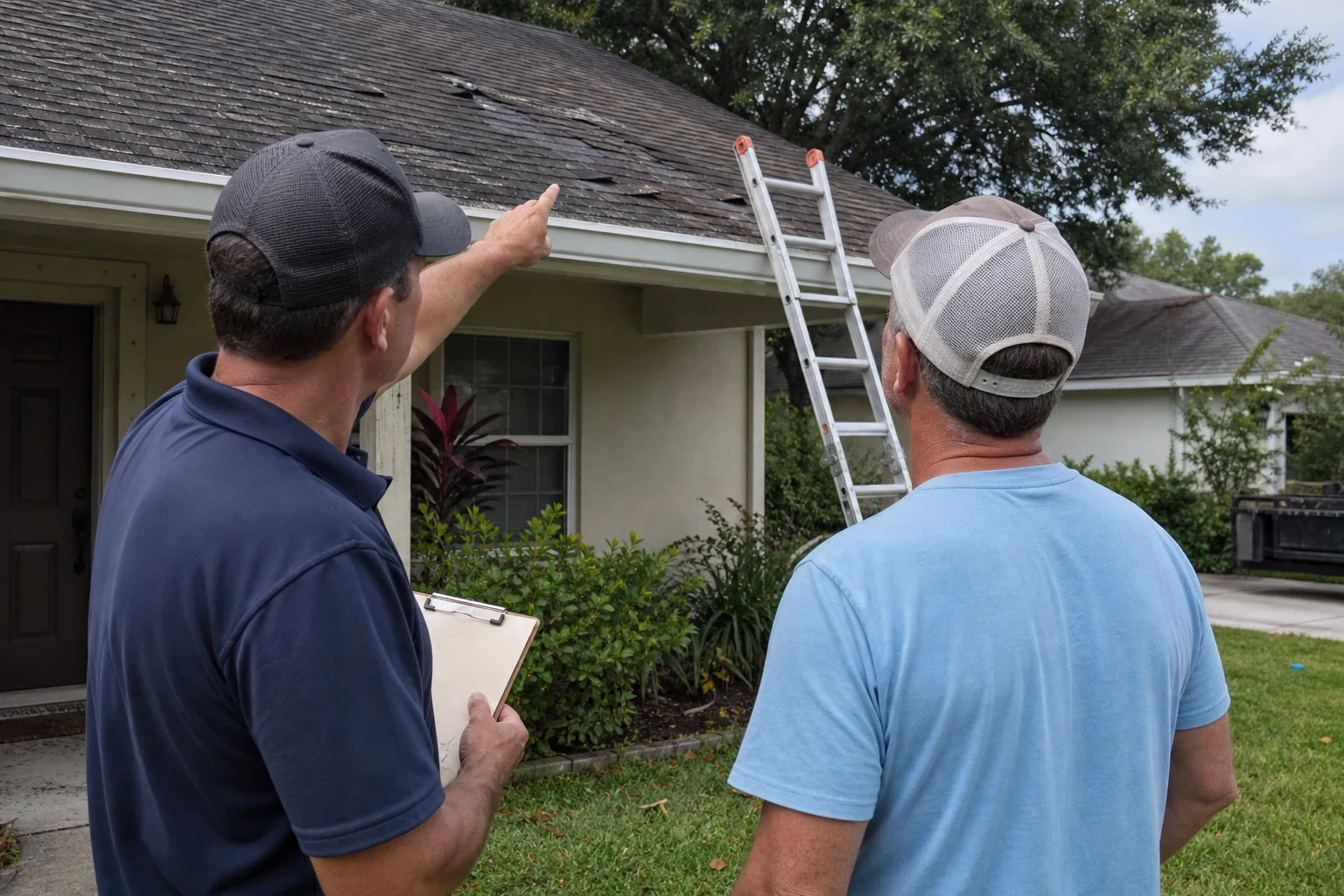
We sit down with the photos and walk through each finding: what started it, and whether it needs attention this season or can safely wait. Where repairs make sense, you receive a free estimate broken out line by line, with no pressure to book.
Inspection questions we hear often
How much time does an inspection take?
That varies with the roof's size and how hard the attic is to get into. Big or steep roofs need more time, and we would sooner stay longer than skip a flashing detail.
Does someone have to be at the house?
For the outside work, no, though we welcome you. We do need someone to open up the attic, and plenty of owners enjoy going over the photos with us before we head out.
Is the inspection a pitch for a new roof?
It is not. We recommend replacement only when the roof truly calls for it. Plenty of visits end with a couple of small fixes, and some end with none. If the roof is near the end of its life, the photos make that clear, and we give you a straight estimate of how long a repair might last so you can compare.
Can you help after a storm if I file a claim?
We can. Post-storm inspections cost nothing, we photograph what the storm did, and for storm claims we work with your adjuster directly so every item gets seen. Coverage is the adjuster's call; our part is making the damage plain. The repair side is covered on our storm damage repair page.
How often should a roof get inspected?
For most roofs, once every year or two, and again after any big storm. Hurricane season lasts from June through November, so late spring is a popular time to book.
What if the inspection turns something up?
We give you a free estimate that lists each repair on its own line. Financing is available for bigger jobs. You decide if and when to go ahead.
Know what your roof needs before it shows you
One visit gives you photos, plain answers and a free estimate for any work. We serve Green Cove Springs and nearby towns including Fleming Island, Orange Park and Middleburg.